This morning while discussing the Moscow metro bombing, my World Issues teacher asked me—since I’m Russian—if I’d be able to give an overview of the ongoing Russo-Chechen conflict that has resulted in several terrorist attacks in the past decade. My first reaction was surprise that he’d assume my knowledge of the situation based simply on my nationality. My next reaction was the realization and embarrassment that I knew next to nothing about the conflict, despite having just written an essay for that same class on Soviet influence. (In my defense, I focused mostly on Georgia for the essay.)
When people picture Russia I guess this see this sort of Second World, rugged, half-civilized, half-corrupted country with Vodka fountains, cigarette vending machines, haggard old men and beautiful women. The reality is that Russia’s major cities, like Moscow, are not that different than New York City, or Toronto, or any other major North American metropolis. My last time in Moscow we stayed at the Marriot hotel, and out of the few restaurants we ate at, one was a Texan grill, and another was a KFC. Almost everyone speaks English. It is not uncommon to see a Peugeot or any other glorified European vehicle. And while in the West famous brands like Mercedes stick to “luxury” cars, in Russia and Europe they don’t hesitate to also design vans or buses. The differences begin to arise when you leave Moscow in your rented car and travel out to the boonies. In Russia, each city or town has a number assigned to it which appears on cars’ license plates, so those infamous Russian cops, always looking for a buck from a bribe, can tell your car is from Moscow, and by the looks of it is rented, which means your probably have money, which means they have 30 seconds to think up an excuse to pull you over and get it from you.
There have been a few situations where the Family Guy style stereotypes of Russian life have played themselves out in front of my own eyes. One was when we were driving towards Moscow through country roads, and to the side of the highway, saw an abandoned rusted tank sitting in a muddy field. Another situation I didn’t actually see because I was looking away, but my family has reiterated for me enough times that I have engraved it into my memory by sheer will and desire to have seen it. Across the street from out hotel was a fancy, upper class, restaurant and lounge, and while I wasn’t looking, out of the doors came a security guard with an automatic machine gun, followed by a couple dressed in evening clothes. They got in the car, and their “escort”, who by my family’s given description, looked more like S.W.A.T. team combatant, shut their door for them and subsequently got in on the other side himself.
The metro bombing now adds to the international fear of the subway. I remember when we visited my grandparents in Connecticut and drove with them to New York City, they refused to ride the train. If only I was still in contact with them to get their opinion on “America’s Worst Mom” Lenore Skenazy, who let her nine year old son ride NYC’s subway alone. I am earnestly surprised, that with today’s extreme daily risk-taking, from smoking to flying, anyone can be deterred from taking the train as transportation. Of the 7,000 people that ride the subway in Moscow everyday, the second largest subway system next to Tokyo, 38 died this morning, in an attack that is now getting blamed on al-Qaeda as well. What’s eerie and a shock for me is hearing names of places, such as Lubyanka station or Gorky Park—places that I until now associated with summer vacations and family photos—being talked bout in terms of casualties and damage. A boycott of the subway by Russians, or of airplanes by Americans, would be a terrorist victory indeed, for then they’d have truly negated our mobile freedom. Yes, there are risks in taking the train, or in flying, or in driving a car, but, in the words of Don Draper in Mad Men’s first episode, “You still have to get where you’re going.”
Monday, March 29, 2010

Thursday, March 18, 2010
A Faster Transition
Enlightenment era philosopher Marquis de Condorcet envisioned the history of the world divided into ten stages of continuous progress, the last stage being utopia. This belief was upheld until the early decades of the 20th century, when it was crumpled by the disaster of the Great War (Schlesinger, 1997). Condorcet’s idea correlates with Clinton’s superimposition of democracy over dictatorship agreeably, because both are based on the principle that anything good and just will be triumphant and desired, by “universal hunger for liberty” (Gerard, 2005). The switch from dictatorships to democracies in developing countries is a constant one, making democracy an achievable goal, and insuring its existence and defense for future generations. How then, are the momentary lapses in democracy, such as war, depression, and communism of the 20th century to be explained? In the words of Patrick Swayze in 1989’s Road House, “It’ll get worse before it gets better.”
History today moves increasingly fast, accelerating in its sequence of events at a rate than politicians during the 1600’s—the revival of modern democracy—could never predict (Levinson, 2006). Schlesinger’s comparison of the Industrial to the Computer Age is an apt example of such progress; however, the transition of speed can be applied to governments too. Levinson gives an ample timeline of the transition from monarchal to democratic ideals during the Enlightenment period. In France, it took nearly two centuries of philosophical dispute to overthrow a millennia old monarchy in French Revolution—only then to result in an empire. Nowadays, dictatorships, democracies, military juntas, and everything in between, alternate in some nations as fluidly as four-year US presidential elections. What signifies the triumph of democracy is that most of these countries have lately been landing on the democratic side of the coin toss.
In Argentina, the government made the switch from military to civilian rule with the first democratic election of Raul Alfonsin in 1983. South Korea, too, abandoned its war-torn dictatorial past with its first civilian president in 1992. Algeria and Benin have both instated themselves as emerging democracies in the 90’s and early 00’s with the allowance of opposition parties and multi-party democratic elections. Even South Africa, a nation deemed as a lost cause due to its ruthless hierarchal rule, elected Nelson Mandela as its first democratic president in 1994.
Schlesinger’s argument is that these countries are young developing democracies, easily swayed and with not enough years of democracy to be considered substantial democratic converts; unlike the century old democratic origins of the US. But when the rapid approach of history today is compared to the slow continuance of the 1700’s when the US gained independence, today’s emerging democracies are gaining liberty faster than their dominant predecessors. They’re accomplishing in a few years what took some nations lifetimes; what took the US decades to institute, or for France, centuries.
Many nations will achieve democracy in the coming century—some on their own, and some with foreign aid. Many will lose it and be setback. This relapse is an important step in the recovery process—as the first democratic seeds have already been planted to later be grown. Tony Blair’s proposal that “democracy is hard to bring into countries that have never had it before” is true, but that once first bout of democratic rule, no matter how quickly halted, is a first step. Amassed, these nations show a collective support for continuation of democratic governance.
Gerard, Alexander. "Making Democracy Stick." Hoover Institute. 2005.
Levinson, Mark. "Democracy Here Is Not Necessarily Democracy There." International Society of General Semantics. 2006.
Schlesinger, Arthur, Jr. "Has Democracy a Future?" Council of Foreign Relations. 1997. http://www.fsa.ulaval.ca/personnel/vernag/eh/F/cause/lectures/Schlesinger.html
“Faster, Higher, Stronger”: Reassessing the Olympic Motto
(2/1/2010)
What does it mean, for a nation, to host the Olympic Games? Is it competitive edge, or national pride that drives countries to host? Is it the chance to give back to the world, or the freedom to earn from it that compels politicians to place their bids? While torch-bearers line up, coaches get interviewed, and athletes train to ski, skate, and luge their way through the 2010 Olympic and Paralympic Winter Games, provincial leaders and finance critics stay busy predicting the revenue the event will bring during the season. Thus it seems the expectation of monetary proceeds is regarded higher than the expectation for medals. Is Olympic success then, determined by honor, or measured by profit?
As far as profit goes, Vancouver need not look further than Salt Lake City—the host of the 2002 Winter Games—to catch a glimpse of their coming economic boost. Utah’s Life in the Valley magazine claims $4.8 billion in sales, $1.5 billion in earning for workers, and 220 thousand visitors in Salt Lake City as a result of the Olympics. In several recent articles by Utah’s KSL news station, residents mentioned the state is still in an economic haven eight years after hosting the Games. Not only does it earn revenue for its own Olympic exploits, but gets a share in the Vancouver Games too, as companies use Salt Lake’s photogenic venues and snowy landscapes to shoot their own Olympic commercials to air in February. Already predictions are in on Vancouver, which expects to outperform Utah with twice as many visitors. According to the Conference Board of Canada, Vancouver is projected to be number one in economic growth in 2010, with a forecasted 4.5% increase. The “Your B.C. Government” site, in accordance, boasts a $4 billion sum of economic activity brought on by the Games. It seems so far that these aforementioned statistics—along with the Olympics’ costs, and the inconveniencing of Vancouver residents due to constant construction road-blocks and traffic detours—have been making more headlines than the sports themselves. I’m no athlete, but when the focus is so tragically shifted from its main point, one has to wonder what role sports really play in the Olympics.
Lesser known sports the likes of lugeing, bobsledding, and the biathlon attract little attention in the Olympic off-season, making them existent almost solely for the delectation of the athletes. A tripartite diffidence has formed between the athletes, the public, and the government. The athlete, mechanical and precise, achieves victory in his sport regardless of viewers or profits. The public watches in a patriotic daze, caring little for the sport, but cheering earnestly for medals. The government, in the meanwhile, cashes in on the efforts and fervor of both.
The Olympic motto of “faster, higher, stronger”—in reference the expected athleticism of the event—has instead turned into an economic standard of “faster” spending, “higher” payout, and “stronger” market. One must not forget that we live in a world where the half-time show gets more coverage than the game, where commercials during the Super Bowl are reviewed more than plays, and where red-carpet fashions outshine cinematic performance. It is no wonder then, that like music on the radio, or dramas on television, sports have become filler in between commercials. Importance is placed not on the features, but the numbers they earn. We get to enjoy a competitive show, and the athletes get their medals, neither of us aware that we’re simply pawns in the biggest quadrennial pissing contest of the world; in which the purpose is to outperform the former in medals as well as in finance. The Olympic creed, after all, as coined by Pierre de Coubertin, reads: “the important thing in the Olympic Games is not to win but to take part.” And in taking part, apparently, reap all the earnings you can while the chance exists.
Monday, January 11, 2010
Paradox of Fiction (a)
"a) We often have emotions for fictional characters and situations know to be
purely fictional.
b) emotions for objects logically presuppose beliefs in
the existence of those objects.
c) We do not harbor any beliefs in the
existence of objects which we know to be fictional"
The emotions we feel for things are not rooted in the objects themselves, but rather in the "idea" behind those objects. Take a child with a favorite toy, for example: the child feels attachment not to the material of the toy itself, but to the idea of joy and happiness that the toy brings; maybe of the memory of whoever gave that toy to them.
Therefore the idea of emotionally bonding with fiction seems even more rational than with an object. Fiction, unlike a toy, is immaterial: it cannot be seen, held, or felt. Only the "ideas" of it exist. Therefore by bonding with fiction we break the necessity of a buffer between us and the idea. We attach ourselves straight to the “ideas” fiction presents, rather than an object we use as a mediator.
"Concerning the Paradox of Fiction"
Wednesday, December 30, 2009
Found Art
Towards the end of the Second World War, an America soldier by the name of John Pistone broke into Adolf Hitler’s house in the Bavarian Alps, along with his accompanying platoon. He took for himself a souvenir, pilfered from a nearby desk or bookshelf. This story has surfaced on various home pages’ news sections across the internet, each with a concluding emphasis on the importance of the souvenir’s return to Germany.
Pistone’s post-war prize—not only a symbol of Hitler’s defeat, but also a personal trophy of glory, self-awarded for making it, for having been there—was a photo album, which inside it contained a collection of photographed paintings Hitler wanted for Nazi Germany’s new institution devoted to the arts: the “Fuhrermusuem”. Why shouldn’t he have stolen it? I’d take inventory on the man’s house had I been there, having suffered his atrocities.
It didn’t matter what was in the book (it might as well have been something as universal as the Odyssey), but where the book was found. It’s not every day you stumble into a surrendering dictator’s abode; and it’s even a rarer occasion to take home with you, back overseas, a little hard-bound artistic collage of Nazi-coveted artwork. This soldier, just happy to be alive, to have made through hell, would have been just as content returning home to his wife and kids empty handed to revel in the successful years of post-war glory. But his stolen treasure added the icing on the cake, the cherry on top, the spiked bayonet at the end of a rifle; and the book would forever remain on his bookshelf or desk—maybe polished, maybe covered in dust—just as the fuhrer had once kept it on his. Maybe one day, the soldier’s kids would knock it down carelessly, and he’d catch them in the act; then reprimand them, then soften them back up, and use this as an opportunity to tell them of how their “good ole’ granddad busted some commie ass” during his militaristic heyday.
A bragging right, that’s all it was. To be placed on a fireplace mantle, and be looked upon by curious neighbors and local photographers, then passed on to the next generation, and then the next—until the museums took it.
It could be that while it remained in the hands of John Pistone, the art in the book was appreciated. Or it could be that not a single photograph in the book’s pages had been looked at critically since Hitler looked through it and said, “That one!”
Sunday, December 27, 2009
Avatar
Avatar is emotionally involving, and convincing as far as modern day humans’ intentions are concerned. The futuristic, military equipment and gargantuan bulldozers used by the humans in the movie were only slight exaggerations of the real world. Its special effects bring Final Fantasy-esque landscapes to life, and the precipitous hanging cliffs—known in the film as the “Hallelujah Mountains”—could with ease trigger anyone’s acrophobia.
The Three-D I thought to be unnecessary; it often got in the way of the films intricate forest scenes. The characters ran wild through trees for most of the movie and my eyes often lost focus, distracted by the blur of intercepting branches. The Na’Vi’s unique faces and their world’s unexplored colorful creatures would have been easier to absorb had they been depicted more definitely; without the awkward, oblong protruding angles Three-D offers.
The addition of the depth dimension was not just for show—it sends an underlying message pushing the “moral necessity of seeing other beings fully.” (The realization that Three-D was used intentionally, however, won’t come to most viewers until after the movie, so it doesn’t save the film from being seen as a superficial, three-hour display of graphics and scenery.) The Earthlings saw the indigenous tribes of Pandora as savages, standing in the way of natural resources (much like we see the “uncontacted” tribes of the Rainforest today). They saw only their animalistic and natural qualities, but failed to consider their souls, intellect, or cultures, which is what separates all people from animals.
Avatar also offers the idea that humans, like the Na’Vi, were once also connected to the Earth as they are. This makes me wonder: did humans and animals at one time also have extending pony tails which physically conjoined, as well spiritually and mentally connected them to the wildlife? Was this trait, deemed unnecessary after our neglect and taming of Earth’s spirit, discarded as evolution progressed? Avatar was exhilarating to watch, and its subliminal spin brought new life to the ancient tale of colonialism versus aboriginality.
Wednesday, December 23, 2009
Oh shit, oh shit, oh shit! It's barely past noon and it's already started raining. The weather forecast flashes in front of my eyes as I leave the front door: a bright yellow sun hanging loosely on the screen, covered on one side by precipitous raindrops and on the other by foreboding clouds. Risk of thunderstorm. Alert. Alert.
My bike sits chained to the rack where she left it; too bad I missed her this morning. Since I woke up I worried if she had remember the combination to the lock or not (thank God she did). Maybe that's what the call was about earlier. Had I managed to stay awake long enough to call back I would have known for sure. On my way out of the parking lot I notice a couple, lying together in the grass below the billboard. That could have been us below that billboard, had I only picked up my damn phone.
I start biking home and wonder if I'll make it to my doorstep before the real downpour begins. This was just a taste, a drizzle, teasing and playing with us, an appetizer for the meal that was about to come: a three-course platter of lightning, thunder, and gale force winds, and a light rain embossed in a stale humid air for dessert.
It's typical for someone to picture the worst scenarios while commuting home during harsh weather conditions: family members trapped between cars in highway ditches; children struck by lightning under trees near playgrounds; fathers driving on a highway during a snow storm Jack Frost-style, seconds from crashing. I picture myself in a tornado, spinning endlessly on my bike with my hands gripping the handlebars and my legs kicking violently. I'm the cow from Twister, moo-ing my way through a whirlpool of dust and debris. I'm little Dorothy, caught in a storm; but instead of a house all I have are two wheels and some pedals, and my Kansas is just Central Ontario. My Oz is my imagination.
Even now as I hurry past the red fire hydrants, the left-behind yard toys, and the unchained bicycles across numbers of front porches that are soon to been air-raided by my imaginary typhoon, for a just a single moment I let go of my sense of urgency and focus my attention on the raindrops hitting my forehead. They cool my skin in ways that a splash of icy water from the sink could never do, for they aren't frozen but merely chilly. They tease my skin with the promise of refreshment, prolonging my enjoyment as the time interval between each drop shortens. Not even the fatigue and soreness I was beginning to feel in my thighs from the strain of biking is noticeable anymore. It's not easy to depart from the physical world when you're in motion (and not very safe), but once you do it truly is something to enjoy, to be proud of. Letting go relieves stress and eliminates anxiety. It doesn't eliminate the conflict, just like painkillers don’t eliminate the cause of the pain; but it provides a temporary solace, so that once you’re refreshed you may think more rationally when faced with bigger problems, those that even painkillers can’t fix.
Pulling up to my driveway I see my reflection in our large living room window from across the lawn. My hair looks half-soaked and disheveled, and my pants are splattered with mud. Today is the last day of school, and I have nothing to show for it but a backpack full of hand-outs that will soon fill the recycling bin up to the brim, or burn bit by bit in the fireplace. Nothing at all is different about today’s arrival home on my bike than on any previous day throughout the year. Judging by this weather, it surely doesn't feel like summer. Maybe a week later it will settle in. Maybe once July comes the sun will show itself, and I'll get to sleep in on a Saturday morning without that feeling of having wasted half a day, that I get so often on school-year weekends.
"Some times a thousand twangling instruments will hum about my ears, and sometimes voices."
I often find I like quotes more than the books I read them in. I chicken pick 'em from dialogues, disregarding their context. I place them on the cover pages of essays, on notecards, on my Facebook status, on blog titles...
The above quote is originally from Shakespear's Tempest, but I first read it in Aldous Huxley's Brave New World. The passage, in the latter version, gave me goosebumps, and I read it over and over again after finishing the chapter, and then again after finishing the book, and then again before returning it to the library. It's quoted by Mustopha Mond--one of the Word Controllers of Brave New World's utopia--upon hearing that the Savage found the civilised world's music beautiful.
Apparently, during Huxley's stay in Hollywood, he tried his pen at screenwriting, and produced forth a screenplay of Alice in Wonderland, to be read by none other than Walt Disney. Disney refused the proposal because "he could only understand every third word."
"Do you remember what Miranda says?"
Monday, June 15, 2009
"Stretch"
Since the cause of Carradine's death has now been determined as official, the dust has begun to settle and people now find it morally acceptable within themselves to wonder, "Whatever happend to that film he was shooting?"
Now, David Carradine was no Heath Ledger, and he definately wasn't prepping to be the next Joker (more so the next Dumbledore), so will his final role in the new film be anticipated as much as the new Batman villain's was?
The movied, titled "Stretch" (the irony), is still being shot and had a few more significant scenes to shoot featuring the late actor. However, it is now being rewritten to accomodate Carradine's absence.
Somehow, I am incapable of finding any legitimate facts on the internet pertaining to the film. Not even my loyal IMDB has come to my rescue, nor the good sumaritans from Yahoo! Answers. It was only through Amy Grindhouse's page that I was able to find the tyniest slice of info.
"Please sir, can I have some more?"
David Carradine's Last Night in Bangkok
"One night in Bangkok makes a hard man (David Carradine?) humble
Not much between despair and ecstasy
One night in Bangkok and the tough guys tumble (or hang?)
Can't be too careful with your company
I can feel the devil walking next to me"
Wow, talk about "ahead-of-its-time". Seems like Murray Head's one hit wonder is still relevant today, summing up a modern tragedy with a song about extreme chess. Despair and ecstasy indeed (but in the opposite order).
This reminds me a lot of a skit Dave Chappelle did mimicking the constant foreshadowing in Tupac's lyrics from songs (suposedly written in '94) released after his death. In this video Dave Chappelle (as Tupac) raps about modern issues and events as if he was still alive today.
"Listen close as life turns its pages
Makiaveli here kickin' rhymes for the ages
Seen things in stages, Wise words spoken by sages
From Skytel to Blackberry pagers
Your crew don't phase us
We'll make you busters pay us
Run up in yo spot like CJ from San Andreas
I wrote this song a long time ago
A real long time ago, FEEL ME!
I wrote this song a long time ago
It was the dopest song I ever wrote... in 94'
What can a n**** do
When half the people voted for George W
Life's a bitch, f*** George W., can't be true
I want to choke him, cause he's a snitch
I'm talking bout George W. Smith
From city council
He ran in 93 out in Oakland.
You probably didn't hear about him."
Another dead rapper turned prophet after his death is The Notorious B.I.G, through his lyrics in "Juicy":
"Now I'm the limelight, 'cause I rhyme tight
Time to get paid, blow up like the World Trade"
Silly political revelations aside, when it comes to George Bush related anger, no one does it better than Immortal Technique in "Bin Laden".

Friday, June 12, 2009
Instant Karma
A few Sundays ago as I was mowing the lawn I noticed a bumble-bee swiftly hovering above the blades of grass I was about to decapitate. As I aproached, I figured it was probably low enough for me to runover, so I lifted the front wheels of the lawn-mower and charged ahead. The bumble-bee swerved away, and before the lawn-mower's front wheels had dropped back on the grass, I had already jumped away from the scene as the yellow menace came at me.
Later, after I had filled the tank up with gas, I forgot to screw the cap back on. When I started it up, the lawn-mower transformed into a fountain, ejaculating gasoline a foot high. I took this as a big "Screw you!" from mother nature and proceeded on with my day.
Later, after I had filled the tank up with gas, I forgot to screw the cap back on. When I started it up, the lawn-mower transformed into a fountain, ejaculating gasoline a foot high. I took this as a big "Screw you!" from mother nature and proceeded on with my day.
Wednesday, June 10, 2009
Matryoshka

'Nuff said
On an SNL skit a while back, during the "Weekend Update", an Angelina Jolie impersonator came out to argue with another baby-lovin' actress (I forget who) to argue over who got the most exotic children.
Angelina says, "Well, I got a baby from Russia."
The second actress responds with, "What's so special about a Russian baby?"
"Because inside a Russian baby is another baby, and then another baby, and then another baby..."
Yesterday when I was signing on to MySpace I glanced over at the celebrity updates, and saw Owen Benjamin's status update, which read something like, "I'm bringing the word 't'was' back, so when people ask, 'Hey Owen, how was the party?' I can tell them, 'T'was good.'" Pfft, I've been saying "t'was", "t'is", and "t'night" even before Pirate became a legitimate language choice on Facebook (I'm serious, check your settings).
Now I would have loved to copy and paste the exact wording on here, but MySpace dosen't post status updates on the person's profile for some reason. It's funny how a website, when desperate, can copy every major aspect of its competitor's pages (such as applications, mutual friends, status updates, etc.), yet miss all the miniscule yet significant details that make other sites so much easier to navigate.
Oh, and by the way, Owen Benjamin ("He's got two first names!"), is probably better known as the guy who played the loyal bartender in The House Bunny. Personally, I think he looks like a younger version of Craig Ferguson from The Late Late Show.


Meh...
Featuring Craig Ferguson is Niagara Motel. It's one of those films that you would never rent or even watch for free online, but merely pick up and glance over while at the $5 bucket in your local video store. But I managed to pick it up from the library and it turned out to be quite decent, at least for those who've been to Niagara Falls and wondered what it would be like swimming off the edge.
Now I would have loved to copy and paste the exact wording on here, but MySpace dosen't post status updates on the person's profile for some reason. It's funny how a website, when desperate, can copy every major aspect of its competitor's pages (such as applications, mutual friends, status updates, etc.), yet miss all the miniscule yet significant details that make other sites so much easier to navigate.
Oh, and by the way, Owen Benjamin ("He's got two first names!"), is probably better known as the guy who played the loyal bartender in The House Bunny. Personally, I think he looks like a younger version of Craig Ferguson from The Late Late Show.
Meh...
Featuring Craig Ferguson is Niagara Motel. It's one of those films that you would never rent or even watch for free online, but merely pick up and glance over while at the $5 bucket in your local video store. But I managed to pick it up from the library and it turned out to be quite decent, at least for those who've been to Niagara Falls and wondered what it would be like swimming off the edge.
Wednesday, June 3, 2009
"Ejacula picnic"
Russell Peters concert tickets for June 12 in Toronto: $78.75
Adult single-ride GO Train ticket: $6.25
Logging on to Ticketmaster to find a verification code that requires you to type "Ejacula picnic": Priceless
But with my on-going problem of being too late and too poor, I won't be attending this event, at which the comedic genious of Russell Peters will perform. Hopefully, I'll be able to catch him in October in Kitchener.
...
I had a hearing test two days ago, and as sure as I was I didn't need one, I agreed to go since the office was near a Taco Bell. At the hearing center I was the youngest patient there by about 60 years, which served as proof to me that this clearly was unecessary. There is no way that my hearing could be as worse as those aging folks, and I almost felt bad for showing up; as if the doctor was wasting her precious time on me, who's hearing was probably perfect.
While in the waiting room, I read an aritcle on Weeds' star Mary Louise Parker in some magazine, and about how she likes to get naked alot. Having reached the maximun capacity for nudity on the show, she is now exposing herself live in theatre performances. When I first discovered Weeds, I watched the first season plus two episodes of the next one in a day online, at watch-weeds.com (yes, its that simple). Realizing that I only had two more seasons to go through, and that new episodes wouldn't come on for nearly a year, I decided to prolong the enjoyment and spread the next two season out over half a month. This show is more creative and halarious than any Despearate Housewives drama you'd see on regular television. Plus, every episode after the first season features a new band performing the title song everytime. And in a season two episode, Snoop Dogg even comes in to drop a track about the "MILF Weed".

"It's grown and it's green like the Hulk when he's angry,
Break it up, break it up, smoke it up, tangy,"
For the hearing tests, I was put in this little soundproof booth, filled with all kinds of gadgets and medical equipment, having to do with ears off course. The room is what I pictured all those drug testing facilities in the 50's and 60's would look like, as in the opening scenes of Pinneaple Express. The room had a glass pane, and on the other side sat the doctor. I had foam headphones stuck into my ears, which were attached to wires going into some machine. These were hooked up to her microphone, and I had to repeat after her, as the volume got lower. The words were simple such as "airplane" or "birthday", and were switched up whenever she noticed I had them memorized. Then I was subjected to what seemed like an endless array of every possible beeping noise ever imagined. These sounded like everything from telephone rings to that annoying non-stop buzzing sound dial-up internet connections make. I completed the examination, and my hearing proved to be "fantastic", like I assumed all along. I was then informed about $300 "musician's headphones" which adjust the frequencies that you want to hear. I could never hold on to something that expensive and so tiny. In fact, I'd probably be so nervous about breaking or loosing them, that the pressure put on my mind to keep them safe would suck them into my head through my ears, and there would go my $300 hearing loss insurance.
And R.I.P David Carridine, whom I discovered through two of my favorite films, the Kill Bill series, and also in an earlier lesser known Scorsese film he starred in called Boxcar Bertha. I don't know what it is about hotels or high rise apartments that induce death among celebrities. First Heath Ledger in his SoHo condo, then Jimmi Hendrix drummer Mitch Mitchell in a Portland hotel, and now David Carridine in Bangkok. Tsk, tsk...
Adult single-ride GO Train ticket: $6.25
Logging on to Ticketmaster to find a verification code that requires you to type "Ejacula picnic": Priceless
But with my on-going problem of being too late and too poor, I won't be attending this event, at which the comedic genious of Russell Peters will perform. Hopefully, I'll be able to catch him in October in Kitchener.
...
I had a hearing test two days ago, and as sure as I was I didn't need one, I agreed to go since the office was near a Taco Bell. At the hearing center I was the youngest patient there by about 60 years, which served as proof to me that this clearly was unecessary. There is no way that my hearing could be as worse as those aging folks, and I almost felt bad for showing up; as if the doctor was wasting her precious time on me, who's hearing was probably perfect.
While in the waiting room, I read an aritcle on Weeds' star Mary Louise Parker in some magazine, and about how she likes to get naked alot. Having reached the maximun capacity for nudity on the show, she is now exposing herself live in theatre performances. When I first discovered Weeds, I watched the first season plus two episodes of the next one in a day online, at watch-weeds.com (yes, its that simple). Realizing that I only had two more seasons to go through, and that new episodes wouldn't come on for nearly a year, I decided to prolong the enjoyment and spread the next two season out over half a month. This show is more creative and halarious than any Despearate Housewives drama you'd see on regular television. Plus, every episode after the first season features a new band performing the title song everytime. And in a season two episode, Snoop Dogg even comes in to drop a track about the "MILF Weed".
"It's grown and it's green like the Hulk when he's angry,
Break it up, break it up, smoke it up, tangy,"
For the hearing tests, I was put in this little soundproof booth, filled with all kinds of gadgets and medical equipment, having to do with ears off course. The room is what I pictured all those drug testing facilities in the 50's and 60's would look like, as in the opening scenes of Pinneaple Express. The room had a glass pane, and on the other side sat the doctor. I had foam headphones stuck into my ears, which were attached to wires going into some machine. These were hooked up to her microphone, and I had to repeat after her, as the volume got lower. The words were simple such as "airplane" or "birthday", and were switched up whenever she noticed I had them memorized. Then I was subjected to what seemed like an endless array of every possible beeping noise ever imagined. These sounded like everything from telephone rings to that annoying non-stop buzzing sound dial-up internet connections make. I completed the examination, and my hearing proved to be "fantastic", like I assumed all along. I was then informed about $300 "musician's headphones" which adjust the frequencies that you want to hear. I could never hold on to something that expensive and so tiny. In fact, I'd probably be so nervous about breaking or loosing them, that the pressure put on my mind to keep them safe would suck them into my head through my ears, and there would go my $300 hearing loss insurance.
And R.I.P David Carridine, whom I discovered through two of my favorite films, the Kill Bill series, and also in an earlier lesser known Scorsese film he starred in called Boxcar Bertha. I don't know what it is about hotels or high rise apartments that induce death among celebrities. First Heath Ledger in his SoHo condo, then Jimmi Hendrix drummer Mitch Mitchell in a Portland hotel, and now David Carridine in Bangkok. Tsk, tsk...
Monday, June 1, 2009
The Last Titanic Survivor...
...has died, as of yesterday. And now its time to make my girlfriend feel bad for not watching the movie with me, while the 97 year old ex-passenger was still alive.
Millvina Dean, born in London, was only eight weeks old when she boarded the fated ship on April 10, 1912. One of the greatest naval disasters in world history, and she won't even remember it. In fact, she most likely slept through most of it, tucked away in a postal sack, with a pacifier and a blanket. Her brother, Bertram, not yet two years old, was separated from the family during the chaos, but the siblings were reunited on a rescue ship. Their father, ufortunately, did not survive the wreck.
To me, Titanic survivors are alot like Holocaust survivors. Agewise, they're dinosaurs, ancient, endangered (well, those of the Titanic genus are more like extinct). There's only a few of them left, and we're lucky to see one. But Titanic survivors--when they were around--were never exhibited across school districts telling their story. They never got to show us their "before and after" Titanic photos: "Here was me before boarding - :), while the ship was sinking - X(, and being rescued on a life boat - :(". No kid ever came home to his parents to tell them about the Titanic survivor at their school assembly. Having nothing to do with any major wars, and carrying no famous passengers onboard, historically, I guess the shipwreck had little value. But I can't help but think that Millvina and friends would have appreciated if someone had asked them to speak in their classroom, right?
And now, a story about adolesence, featuring the Titanic:
About a decade and a half ago, when my English teacher was still an English student, he asked a girl out to see Titanic, which had just opened in theaters. He planned the date for Saturday, and was hopeful she would accept. He was rejected however, because on Saturday, the girl had to wash her hair. In retrospect, he should feel lucky. Because if she was being honest and that wasn't just an bogus excuse, I couldn't picture him with somebody that high maintenance. My English teacher has not had the desire to see Titanic since.
Personally, I haven't even seen the movie all the way through yet. I have been to the Titanic museum in Mexico, about half an hour south of the border. The only thing I remember was awkwardly watching the naked portrait scene on some TV with a group of fellow tourists, who I'm sure felt just as awkward as me. The thing that bothered me about that particular segment, was the commentary provided by Kate Winslet's "real-life" counterpart Gloria Stuart, who narrated parts of the movie. She said something along the lines of, "I was so nervous," or "My heart beat so fast as I undressed", while looking back at the erotic encounter. Whatever her lines were, it was not something I wanted to hear from a 101 year old.
Unlike me however, there are people who have gained wisdom from the more sensual aspects of Titanic, one of them being Shane Dawson, who learned about sex by watching the film.
(Note to self: Do not leave your ice cream cone sitting on your laptop while typing. Especially when it is on your lap. It will fall.)
Saturday, May 30, 2009
Hear, Hear
As of this week, I am no longer listening to music through headphones. After going to the doctor on Tuesday and hearing from him that I have "noise induced hearing loss", I decided I should try limit the daily beating I bestow upon my eardrums. The way that "NIHL" occurs is through damage to the chochlea by repeated exposure to high intensity sounds. Last night, my right ear was ringing from a show I went to the night before. And yesterday, I could hear the high sqeal in my eardrums during driving school, competing with the hum of three fans, as well as a video about the "5 Keys to Collision Prevention".
About fifty percent of the time my right ear rings anyway. I usually don't notice this until I finally get to bed every night, when every noise and rattle is silenced. Except the constant buzzing in my eardrum, which by now can be considered as permanent. Though cutting out headphone usage will be easy, I don't think I'll be able to pull through when it comes to concerts.
Ear plugs, worn with no shame by the artists themselves, are hardly seen among the crowd in the audience. Mostly they're used by performers and security, standing guard near the stage. To the majority of concert goers, sticking little yellow foam balls in your ears would be considered unecessary, or simply lame. But with my newly discovered diagnosis, and my slight but determined will to get better, I decided to go ahead and maybe try them out at the next show. So I picked some up at a music shop on my way back from driving school.
To test them out, I stuck them in when vacuuming this morning. This was, after cleaning my ears of course, not wanting to remove the plugs to see a smear of ear wax on the yellow surface (now that I think about it, could the purpose of the yellow color of the plugs be to camouflage the ear wax?) When you have an object obstructing the passages in your ear, you can hear every little noise going on inside your head. Every cough, gulp, and chew is amplified. I could hear every little sniffle or clatter of teeth, and of course, that everpresent ringing. And as always, there is that booming noise that comes every time you plug your ears with your hands. To me it sounds like that very low space ship lift-off sound. Or also, like holding up a shell to your ear, except this time the noise is coming from within your head.
So even though most of driving class yesterday was spent worrying about my hearing problem, I did get some bits of valuable information. One of these having to do with how to deal with animals on the road in rural areas. "There is a proper way to hit a deer," my driving instructor said, and everybody laughed, not sure if he was joking or not. He followed by explaining that when you see a deer, the best solution is not to stop or swerve, but to keep going at regular speed. That way, when the deer is hit, it will fly over your car, preventing damage to your windshield. The common reaction is for people to slam on the brakes before hitting the deer, which is then catapulted into the windshield piercing the glass with its antlers (which have killed people by the way). At first I was taken aback by the idea, but after picturing myself on a curvy country road, with oncoming traffic and a semi-truck behind me, I realized that in a "human life vs. nature" scenario, I wouldn't mind knocking a deer over.
And as with every lesson, we had our bit of crazy driving videos. So far, I've seen a man thrown out of a car into an oncoming lane and then run over. I've seen a vicious shopper push a mini-van with her sedan from a parking spot at a mall. And I've seen an angry driver body slam his victim's car hood after a fight, falling off, and then being run over. This week we saw some of the usual mishaps often found on shows like "Most Outrageous Videos", as well as some more than disturbing commercials from overseas.
The last video titled "Russian Woman Parking", reminds me alot of an "accident" I partook in when I was little. My mom, a Russian woman who was attempting to park, scraped the car on a gate once while trying to pull into our driveway at our old house in Mexico. I, being the silly and naive seven year old that I was, immediately jumped out of the car yelling "Accident! Accident!" The car had a pretty significant dent across the passenger's door, with a few metallic gashes along the red surface of our Oldsmobile. The neighbors came out and laughed at the embarassed white lady just learning to drive. The gate remained intact, and the car was eventually sold; dent, humility and all.
With all this talk about crashes and first-time driving collisons, I remembered my first time behind the wheel, or next to it perhaps. It happend at about the same age, and just a few houses down from that cursed gate. As me an my mom approached our house, I asked if I could steer on the last turn onto our street. I was sitting in the passengers seat--a privilege I was rarely granted at that age--and was feeling quite confident pulling up to the intersection. So after my mother instructed me, I put my clumsy seven-year-old hands on the wheel, and made the right turn. Not yet having grasped the concept of steering, I didn't realize that you needed to release the steering wheel to make the car go forward again. So I held on, and kept holding on, until my mom finally slammed on the brakes, meters away from our neighbors gleaming white gate. I don't remember if I was scolded or not for the near collision, but I do know my parents hardly let let me drive so much as a golf cart for the next nine years.
Thursday, May 28, 2009
"She asked me why..."
Having grown up in a private Chrisitan school all through elementary and junior high, I know what it's like having strict rules implemented on me in the classroom. Our school motto was "Safety, Respect, and Responsibility", and for violating this code of conduct, we would receive a "BLEEP!" This stood for "Behavior Lapses Erode Educational Performance." These were for the middle school kids. For the elementary students, they had the "OOPS!" I was still a well behaved young lad during those early years though, so I never got to find out what clever set of words that acronym stood for. From what the cooler and unrestrained children at public school told me, I found out that their version was called the refural, which sounded so much more official and threatening to my fourth grade mind.
The way that these worked, was if your got three of either one, you would get a forty-five minute detention, to be carried out either after school or during lunch with the vice principal. These would most likely involve either picking up trash around the school, or cleaning tables in classrooms. If you managed to get yet another "BLEEP!" after the initial three (Oh, you rascal!), you got an hour and a half detention. An hour and a half of roaming the campus with a black garbage bag and gloves, gathering Capri Sun juice packs and Lunchables boxes.
If you intended on completing your detention during school hours, you had to eat your lunch in the office, and sit there all through recess. During these awkward visits I got to know the staff there pretty well, as well as all the hidden nooks and crannies the office building had to offer. Later at home, when I discussed the day's events with my mother, I learned that Patty's (the secretary) mother lived at the apartment buildings a few blocks down from our house, across the police station. These apartments also served as a halfway home for ex-convicts, an agreement our local neighborhood warriors were petitioning against. Before my office visits, Patty was simply known as the "band-aid lady".
The rule that angered us the most was the restriction on hair length: for guys, it couldn't be past your eyes. This made me so ferociously angry that a school would go that far to monitor someone's appearance. Hats and caps, I understood. Ripped jeans? Sure, whatever. But hair? Is it really that necessary?
If a teacher or supervisor noticed a student's hair length was becoming longer than appropriate, they'd send a polite letter to the student's parents notifying them that their son was violating the dress code. So, for the last two years of middle school, I would grow my hair out as long as I could, brushing it out of my eyes to remain unnoticed, and eventually cut it when I was detected.
This would usually be by our vice principal, who greaty resembled Hitler due to his black hair and mustache (which turned into a full beard during track season).
So when I heard about a seven year old Aborginial boy who's shoulder length hair was cut off by a teacher during class, to me it sounded like business as usual. Of course, the teachers at my old middle school wouldn't actually cut the hair themselves (although I bet some would have love to), instead they'd threaten us with suspension until our hair was back to proper standards. If I ever had a teacher that would be willing to do such a thing, it would be my Bible teacher (yes, Bible is a subject at Christian schools). Countless times she had me sent down to the office for having holes in my jeans, and countless times I have recited the Christian pledge of allegiance under her judgmental stare.
In my ideal world, when asked about his remarkable hair length, the native boy would burst out into the opening lines of the title track from Hair, the musical. I wish that I had been clever enough to do that in my vice principal's office, while being questioned about my hair length. But that wasn't the case, since back then I was more focused on being rebellious rather than ironic, and I angrily complied every time.
Sunday, May 24, 2009
Sunday Afternoon
Today I finally found my guitar strap and slapped it on my guitar. The holes aren't worn it yet so they're still extremely tight, and make a loud noise when the leather rubs against the strap holders. Whenever I move it about my shoulder, it sounds like someone's skin rubbing against a leather sofa. Like on a hot summer today, when you sit down shirtless on your parents' white leather couch, and then your sweaty back sticks to it and you feel disgusting afterwards. This was something I considered doing after mowing the lawn today, but instead I settled for my bed, which is warmer, and less sticky.
One time at school I sat on a piece of gum in the hallway by my locker. I didn't realize this until getting off a different white fabric sofa after about two hours of Cops and Jerry Springer, and turning around to see a dark green smear where my butt had been. Still confused, I grabbed for my ass to feel the remains of the thick, sticky substance. Someone had chewed on this, spat it out, probably stepped on it, and now it had been evenly divided between the floor, couch, and my posterior. I spend the next hour with an old tooth brush and a bar of soap trying to get the stain off of my pants. Then I walked back to the living room, and flipped the cushion.
This was very similar to the time my mom had jabbed me with her nail polish applier while yelling at me to get out of the bathroom after an arguement. Being the elusive culprit that I am, I managed to swerve out of the way, only sustaining a minor smear of bright pink nail polish across the sleeve of my Guns N' Roses t-shirt. As hard as it was convincing her to help while she was still angry, I managed to get directions to where the nail polish remover was located, and made my way down to the laundry room. And once again, I spent an hour with a tooth brush, scrubbing away at my stained and sabotaged shirt.
Tuesday, May 19, 2009
What sound does a Mastodon make?

Mastodon's band members Bill Hinds and Troy Sanders (both to the right of Borat) have always dedicated themselves to looking as scraggly and unkempt as possible. While on stage, guitarist Hinds can often be seen stabbing himself in the chest with his lengthy, stiff beard while headbanging. And singer-bassist Sanders refuses to keep his hair in any organizable manner, with rigid, sweaty locks jutting out every which way. But still, they manage to push through to the mainstream, going as far as being nominated for a Grammy, and appearing on Conan O'Brien. Yet not even on their MTV do they tidy up, performing "Colony of Birchmen" alongside Queens of the Stone Age singer Josh Homme, who did vocals on the original track.
To my dissapointment, the performance didn't do the song justice, and the chorus to me sounded more like yawning upon first hearing it, rather than the harmonic and soulful piece I first fell in love with on the original track. And someone should wake up Josh Homme, because nobody could be so passionate about singing for someone else's band, that they would keep their eyes shut the whole time while performing. Especially at an award show they weren't nominated at, and a crowd so unenthusiastic as MTV's.
On the other hand, the music video for the song has become one of my favorites and makes up for whatever crappy performances they could have put on afterwards. The video features masked tribesmen who I assume are the "Birchmen", roaming the woods as their masks smear and blend into the surrounding nature.
Watch more Blood Mountain videos on AOL Video
Now, though growing ridiculously long beards has been a common practice through metal history, Mastodon may actually take influence from a more historical figure rather than just their musical predecesors. While browsing through their merch, I saw a very unique shirt that I would be tempted to buy, but too shy to actually wear. The shirt features a heavily bearded man displayed on the front, with the band name written out in the strands of his facial hair. The description explained that the picture was actually of a "Russian mystic" known as Rasputin.

Epic t-shirt.

Troy Sanders and Rasputin himself. Anyone else see the resemblence?
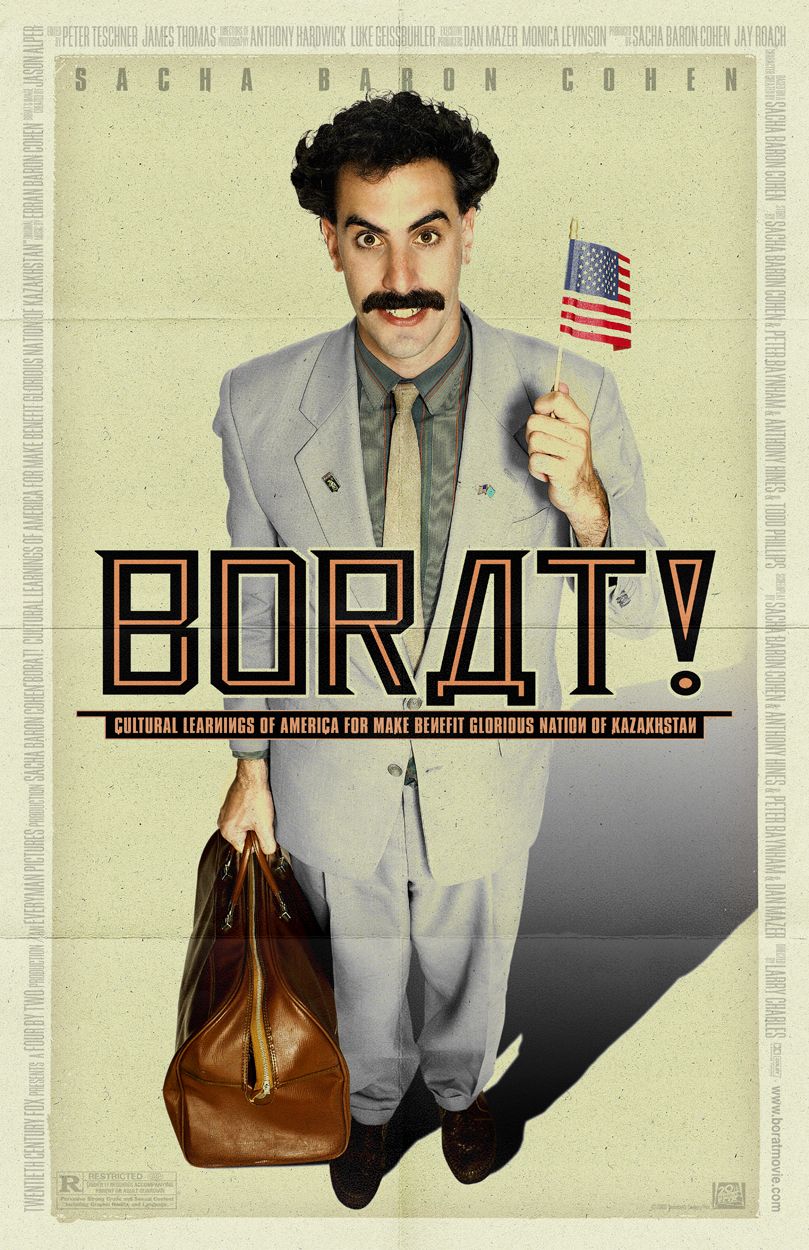
Being Russian myself, I was shocked that I had never even heard of him, and proceeded to do a quick search on Wikipedia. Upon seeing actual photos, I realized that he actually looked quite familiar, and I had seen these same images on an album cover. The album cover of Type O Negative's Dead Again, to be specific, which also spells the album name in English using Russian letters. This is done in the same style as the Borat logo, which if read by a "Russki", would spell "vordt".

Rasputin, who rose to fame during the early 19th century, was a respected prophet and mystic believed to have healing powers. He served as a great influence to then Czar Nicholas II, and caused major political controversy during his years in St. Petersburg. In 1916, he was poisoned, shot to death, and disposed of in a frozen river by conspirators. His genitals, which were reportedly dismembered from him during the assassination, are now being displayed in a jar at an erotic museum in St. Petersburg, Russia, though skeptics claim them as fake. These days, in addition to being mentioned in Mastodon's newest album Crack the Skye, the Russian legend can be seen in Rasputin: The Mad Monk (portrayed by Christopher Lee, now more commonly known as Saruman) and in Rasputin: Dark Server of Destiny (played by Alan Rickman, aka Severus Snape).
Speaking of erotic museums, a Chinese city is planning to open the country's first erotic theme park. "Love Land", in Chongqing, hopes to get rid of sexual tabboos in the strictly communist country. And in Beijing, the Chinese have opened a "spy museum" exhibiting espionage technology, such as guns concealed as lipstick and other gadgets. The only catch is that foreigners are under no circumstances allowed; only those with a Chinese citizenship are granted access.
Sunday, May 17, 2009
Pride and Prejudice... And Zombies?

While browsing through Oddee.com, an online blog which compiles lists of strange and unusual events and people, I came across yet another collection of "Insanely Titled Books".With titles such as The Stray Shopping Carts of Eastern North America and Fuckin' Concrete Contemporary Abstract Algebra Introduction, this list made up a pretty good assortment of peculiar books I would have never come across on my own.
A particular one that stood out to me was Pride and Prejudice and Zombies: The Classic Regency Romance. I have always tried to keep an open mind about what books I read, often delving into "classic" novels well before my time that either my parents or teachers had suggested. Most of these however failed to capture my interest and I would continuosly abandon the tempt after the first few chapters. Having heard of the original Pride and Prejudice and seen it lying around library shelves, I had never considered picking it up and had dismissed it for "one of those books my mother would read."
This new book on the other hand, the zombie version, offered a solution to my problem. Now, instead of going through all four hundred and something pages of uneventful plot, I could read the same novel, except with additional segments featuring zombie action for extra exictement. This would definetaly hold my interest until the end, and I could appreciate this timeless classic with the help of a little bit of gory, violent, zombie chaos.
Why, I'm surprised schools and publishing companies haven't figured this one out yet. By throwing in a bit of the undead into dated and tedious books read in class, they could re-introduce historical novels for younger generations to read. They could begin with Of Mice and Men and Zombies, featuring Dawn of the Dead style zombie shoot-outs throughout rural California farms. Or maybe even an edition of Romeo and Juliet and Zombies, including the two star-cross'd lovers at the brink of a zombie epidemic, eventually turing into the dreadfull creatures themselves. This would revolutionize literature as we know it today, and pave the way for countless of big budget films based on the newly revamped titles.
Among the other bizarre titles found on Oddee are How to Avoid Huge Ships, and Reusing Old Graves. Some of these, such as How to Shit in the Woods, I fail to understand why anyone would actually devote their time to come up with a whole book on the subject. For the equestrian type there is not only Bombproof Your Horse, but also The Big Book of Lesbian Horse Stories, because sometimes, horses on their own just aren't stimulating enough. And for those with artistic intent, behold: The Cunt Coloring Book, for all your clitoral coloration needs. Just be sure to stay within the lines–or should I say in this case–the lips.
Subscribe to:
Posts (Atom)